Provenance
Scan preserved on bitsavers.org (pdf/mit/lincolnLaboratory/); published openly by the MITRE Corporation in 1986. Mirrored here so the site’s SAGE citations resolve even if the archive moves.
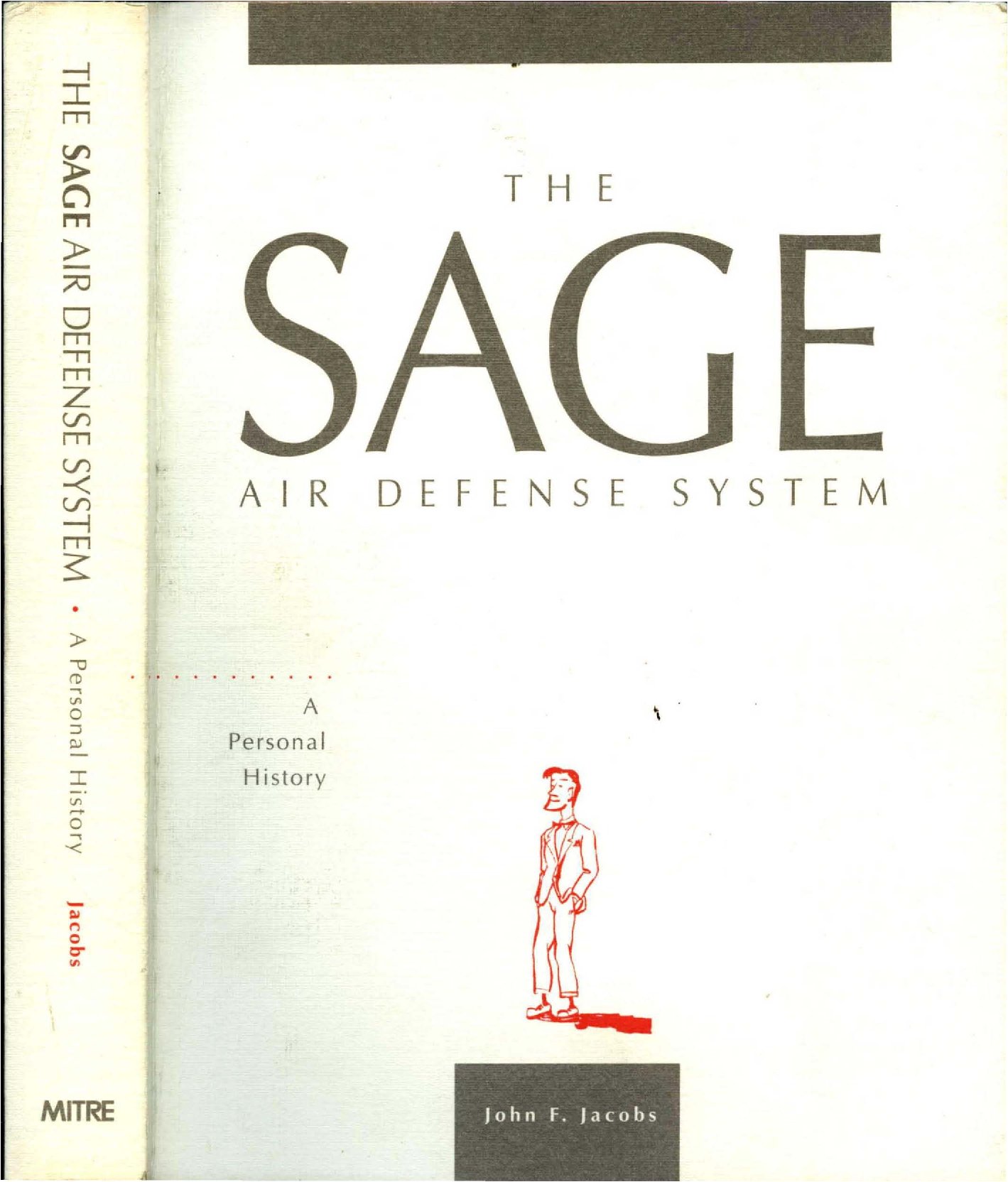
First page - click to open full document
John F. Jacobs joined MIT’s Whirlwind project as a graduate student in 1950, helped design the AN/FSQ-7’s reliability scheme at Lincoln Laboratory’s Division 6, and left as a founding vice-president of MITRE. In 1986 MITRE published his history of the program: part memoir, part chronology, part engineering post-mortem. It is the closest thing SAGE has to an authorized biography written by someone who was in the room, and it is the source this site’s SAGE page leans on for the numbers everyone else rounds off.
Three passages carry most of the citations. The chronology (pp. xvii–xix) dates every program milestone from the 1952 XD-1 contract to full deployment in 1963: “23 air defense sectors: 22 in the United States and one in Canada.” The FSQ-7 description fixes the machine’s vital statistics:
It used 49,000 vacuum tubes, weighed 250 tons, and required three megawatts of power which was provided by five very large diesel motor generators.
And the closing chapter records the quiet end: six FSQ-7s still running in January 1983, and all of them shut down by January 1984: a machine designed in 1953 outliving three generations of successors’ announcements. Jacobs also preserves the arithmetic of early software: Herb Benington’s 1955 estimate that SAGE programming cost about $55 per instruction, at a time when the operational program was heading toward 120,000 instructions.
A note on rights and copies. Published by the MITRE Corporation in 1986 and long out of print; the scan is the one preserved on bitsavers.org, the standard archive for historical computing documentation. MITRE has itself made the program history freely available for decades. If MITRE or the Jacobs estate objects to this mirror, I will replace it with a link.